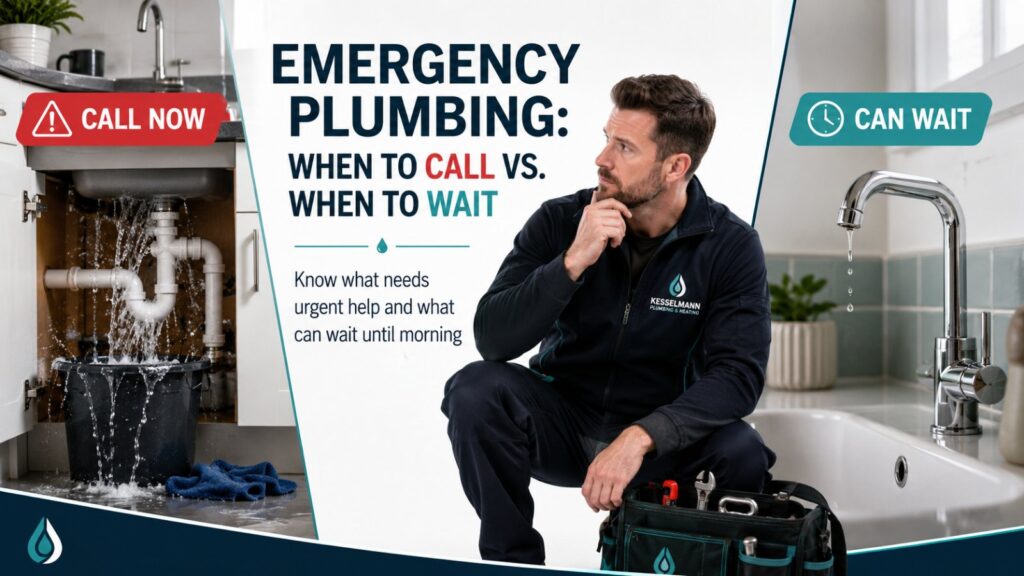
Emergency Plumbing: When to Call vs. When to Wait
TLDR
Call an emergency plumber when water is escaping uncontrollably, sewage is entering your home, you cannot isolate a serious leak, or waiting risks major property damage. A dripping tap, slow basin or small leak you have fully isolated usually waits for a normal appointment. WaterSafe lists burst pipes and serious leaks among plumbing emergencies.
Spoiler
Judge the problem by what happens if you leave it until tomorrow.
If the damage keeps growing, deal with the fault now.
The short answer
Emergency plumbing is for faults where delay creates significant damage, safety problems or loss of an essential service. Burst pipes, uncontrolled leaks, sewage entering the property and water near electrical fittings deserve urgent attention. A contained drip or isolated minor leak usually waits. If you smell gas, call the National Gas Emergency Service on 0800 111 999 rather than booking an ordinary plumbing visit.
What you need to know
- Uncontrolled water loss means act now.
- Shut off the water where safe.
- Water near electricity needs extra care.
- A stable, isolated fault often waits until normal hours.
- Gas smells follow a separate emergency procedure. Call 0800 111 999.
Fun fact
Buildings insurance often covers damage caused by burst pipes and escape of water, subject to the policy terms. ABI also makes clear that poor maintenance and general wear are normally excluded.
So ignoring a small leak for months and then presenting the insurer with the remains of the kitchen is not a flawless strategy.
When should you call an emergency plumber?
WaterSafe directs homeowners towards emergency plumbing help for leaks, burst pipes and similar urgent faults.
Use this test.
Will waiting until tomorrow increase the damage or risk?
Urgent problems include:
- A burst pipe with water still escaping
- A leak you cannot isolate
- Water running through a ceiling
- Sewage entering the property
- An overflowing toilet which will not stop
- A major hot water cylinder leak
- Water reaching electrical fittings
- A serious plumbing failure affecting a vulnerable household
A small fault often becomes expensive because water keeps travelling after you stop looking at the obvious drip.
What should you do before the plumber arrives?
Turn off the water
Find the internal stop tap and shut off the supply where safe.
ABI advises homeowners to know where their stopcock sits and make sure the valve works. The usual location is beneath the kitchen sink.
Then:
- Move furniture and valuables away.
- Put containers beneath the leak.
- Stop using the affected bath, shower, toilet or appliance.
- Photograph significant damage.
- Tell the plumber whether the water is still escaping.
- Explain whether you managed to isolate the supply.
Watch the electrics
If water has reached sockets, switches or electrical fittings, stay clear of wet electrical equipment.
Do not start pulling fittings apart while standing in water.
The plumbing problem does not need a bonus electrical problem.
What plumbing problems usually wait?
A normal appointment makes more sense when the fault is stable, contained and no longer damaging anything.
Examples include:
- A dripping tap
- One radiator staying cold
- A slow basin waste
- A toilet which will not flush when another toilet is available
- A small leak already isolated
- A stiff tap
- Minor plumbing noise without leakage
Calling an emergency plumber at midnight because the kitchen tap goes drip every 14 seconds is an option.
You are paying emergency rates to listen to a tap drip.
When does a small leak become urgent?
Size alone tells you little.
Location matters.
A tiny drip inside an open sink cupboard, caught in a container, is one situation.
The same leak disappearing beneath a tiled floor is another.
Take the leak more seriously when:
- You cannot see where the water goes
- Flooring swells or starts moving
- A ceiling below becomes damp
- Kitchen units become wet
- Water sits near electricity
- The flow increases
- The supply will not isolate
ABI confirms burst pipes and water damage form part of the risks commonly covered by buildings insurance, subject to individual policy terms.
The failed fitting might cost very little.
The floor, kitchen units and ceiling underneath are less forgiving.
Is an overflowing toilet an emergency?
Sometimes.
A blocked toilet which stays contained, with another working toilet available, often waits.
Water or sewage spreading across the bathroom floor needs faster action.
Urgency rises when:
- Waste water escapes
- The bowl keeps filling
- The toilet is the only one available
- Several toilets or drains back up together
- Sewage enters living areas
Do not repeatedly flush an already full toilet.
The fourth flush contains no new engineering information.
What about no water or poor pressure?
Check your neighbours first.
WaterSafe advises contacting the local water company when you have no water, very low pressure or concerns about water quality. The fault might sit on the public supply rather than inside your home.
One weak tap points towards a local fault.
The whole street losing water points somewhere else.
What if you smell gas?
Call 0800 111 999
HSE advises anyone who suspects a gas leak to:
- Call the National Gas Emergency Service on 0800 111 999
- Open doors and windows
- Shut off the gas at the meter if they know how and doing so is safe
- Stop using any appliance suspected of being unsafe
Do not remove the boiler casing.
Do not start searching for the leak yourself.
If you suspect carbon monoxide exposure, HSE also advises switching off the appliance, ventilating the property and seeking urgent medical advice where symptoms are present.
When should you call your insurer?
If water has caused substantial property damage, contact your insurer quickly.
ABI says homeowners should contact their insurer as soon as possible following insured damage such as burst pipes. Their guidance also advises keeping receipts for temporary repairs and taking photographs before throwing damaged items away.
Keep:
- Photos
- Videos
- Plumbing invoices
- Dates
- Details of what happened
- Receipts for emergency work
Common mistakes
Searching for a plumber before stopping the water
If water is pouring across the kitchen, shut off the supply first where safe.
The plumber cannot drive faster than the leak.
Not knowing where the stop tap is
Find yours now.
ABI recommends knowing its location and testing whether the valve works.
Forcing a seized valve
If sensible pressure does not move the valve, stop.
Breaking the stop tap during an existing leak gives you another fault for free.
Treating every fault as an emergency
Urgent attendance costs more.
Once a small leak is fully isolated and no further damage is occurring, a normal appointment often makes better sense.
Waiting because the leak looks small
The amount of water visible beside the pipe does not tell you where the rest of the water has travelled.
What I would recommend
Learn where your stop tap sits.
Check the valve operates.
Save the details of a plumber you trust.
When something goes wrong, judge urgency by damage and safety.
Water still escaping and you cannot stop the flow? Get help.
Sewage entering the property? Get help.
Water reaching electrics? Treat the fault seriously.
Small leak fully isolated with no further damage? Book a normal repair.
Emergency plumbing should deal with genuine emergencies.
Need urgent plumbing help in Weston super Mare?
Kesselmann Heating & Plumbing currently lists 24/7 emergency plumbing and boiler repair services across Weston super Mare and surrounding North Somerset. The published service area includes Worle, Clevedon, Portishead, Nailsea, Burnham on Sea and Bristol. The current emergency contact number shown on the website is 07388 494676.
For active leaks, burst pipes and urgent plumbing faults:
Kesselmann Heating & Plumbing, Plumbing Repairs and Emergency Help
Need a Gas Safe engineer in Weston-super-Mare?
Frequently asked questions
What counts as a plumbing emergency?
A fault deserves urgent attention where delay risks substantial water damage, sewage contamination, loss of an essential service or another safety issue. Burst pipes and uncontrolled leaks are clear examples.
Should I call an emergency plumber for a dripping tap?
Usually no. If the water stays safely inside the sink and nothing else is being damaged, arrange a normal repair.
What should I do first after a pipe bursts?
Shut off the incoming water where safe and start limiting the damage. Move belongings away from the affected area and contact an emergency plumber. WaterSafe lists burst pipes among faults needing urgent plumbing assistance.
Is water coming through the ceiling an emergency?
Treat the problem urgently. Stop using plumbing above the affected area where practical, isolate the relevant supply and keep away from wet electrical fittings.