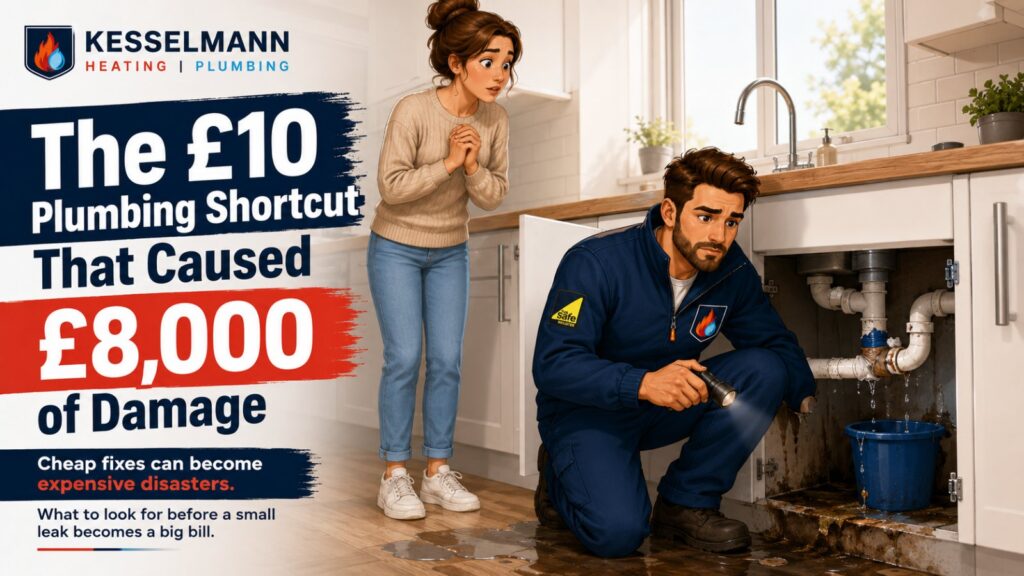
The £10 Plumbing Shortcut That Can Cause £8,000 of Damage
SEO title
The £10 Plumbing Shortcut That Can Cause £8,000 of Water Damage
Meta description
A cheap flexible plumbing hose can fail and cause thousands of pounds of water damage. Learn what to inspect, when to replace it and how to protect your home.
Main keyword
flexible plumbing hose water damage
Supporting keywords
burst flexi hose, plumbing shortcuts, escape of water damage, leaking tap connector, plumbing leak prevention, plumber Weston super Mare, emergency plumber North Somerset
The £10 Plumbing Shortcut That Can Cause £8,000 of Damage
Some of the most expensive plumbing disasters begin with something almost insultingly small.
Not a boiler exploding.
Not the entire water main bursting through the kitchen floor.
A flexible hose.
A cheap little connector hidden beneath a basin, toilet, kitchen sink or appliance.
It may cost around a tenner.
Then one day it splits, pulls away from its fitting or lets go completely.
Mains water begins pouring into the property.
The plumbing repair might still be relatively small.
Unfortunately, the ceiling, floor, kitchen units, electrics and furniture have all joined in.
That is how a cheap plumbing shortcut can become an £8,000 insurance claim.
Or considerably more.
Escape of water is one of the most common forms of domestic property damage in the UK. Insurers collectively pay around £1.8 million every day for damage caused by burst pipes and water leaks.
Quick answer
A cheap flexible plumbing hose can cause serious water damage if it is poor quality, badly installed, damaged, twisted, corroded or left in service after it has begun deteriorating.
Because it is connected to the pressurised water supply, failure can release water continuously until somebody notices and turns it off.
The hose might be inexpensive.
The damage normally isn’t.
Regularly inspect flexible hoses, make sure isolation valves work, learn where your main stop tap is and replace any hose showing rust, fraying, bulging, kinks or signs of leaking.
What is the £10 plumbing shortcut?
Flexible tap connectors, often called flexi hoses, are short rubber hoses covered by a braided metal outer layer.
You will commonly find them connected to:
- Kitchen taps
- Basin taps
- Toilets
- Washing machines
- Dishwashers
- Water softeners
- Showers
- Some heating and hot water components
Used correctly, they can make installation easier and allow equipment to be connected where rigid pipework would be awkward.
That does not make them automatically bad.
The problem is how they are sometimes used.
They get fitted because they are quick.
Cheap.
Convenient.
Then pushed behind a unit and forgotten about for the next fifteen years.
No inspection.
No maintenance.
No thought given to whether the hose is twisted, stretched, rubbing against something or sitting beside a sharp edge.
Looks alright from my house.
Until it isn’t.
Why can such a small hose cause so much damage?
A flexible hose on a mains water supply is holding back pressurised water every hour of every day.
If it develops a tiny weep, you might get damp, mould or a damaged cupboard.
If it fails completely, water can continue pouring out until:
- Someone notices
- The local isolation valve is closed
- The main stop tap is closed
- A leak detection device stops the supply
- The water company isolates it externally
If nobody is home, it may run for hours.
That is when the repair stops being about replacing a small connector.
Now we may be dealing with:
- Saturated kitchen units
- Damaged flooring
- Collapsed ceilings
- Wet insulation
- Damaged plasterboard
- Electrical inspection
- Replastering
- Redecoration
- Mould treatment
- Drying equipment
- Damaged furniture
- Temporary accommodation
- Water reaching the property below
Industry reports have put serious escape of water losses into many thousands of pounds. Aviva previously reported average burst pipe damage of around £8,000, while current ABI figures show the average household insurance claim across all causes exceeded £6,000 during early 2026.
So £8,000 is not an absurd clickbait number.
It is entirely believable.
It is not always the hose itself
When a flexible connector fails, people understandably blame the hose.
Sometimes that is correct.
Sometimes the real issue is the installation.
Common installation problems include:
ProblemWhy it mattersHose twisted during installationPlaces stress through the rubber and braidingConnector kinked sharplyRestricts the hose and weakens the bendHose stretched too tightlyPulls constantly against the fittingsWrong length usedCreates excessive bends or tensionHose rubbing against an edgeCan gradually damage the outer braidingPoor quality connectorMaterials and manufacture may be less durableFitting overtightenedCan damage seals or connectionsFitting left looseMay leak or work loose over timeCorrosion ignoredWeakens the hose and end fittingsNo accessible isolation valveMakes stopping a leak far harderHose hidden permanentlyPrevents inspection and early detection
Manufacturer guidance commonly warns against installing flexible hoses with tight twists or severe bends because this can increase the risk of damage.
The hose may cost £10.
Correctly planning and installing it takes slightly more thought.
And there lies the problem.
Why plumbers use flexible hoses
Let’s be brutally fair.
Flexible hoses exist for a reason.
They are useful.
They make it easier to connect taps and appliances when the exact alignment is awkward.
Sometimes they are entirely appropriate.
The issue is not:
Flexible hose equals cowboy.
The issue is:
Flexible hose used as a substitute for thinking.
A proper plumber should consider:
- Is a flexible connector actually needed?
- Is it approved and suitable for the application?
- Is the length correct?
- Will it remain accessible?
- Is it twisted or strained?
- Can it be isolated?
- Will it rub against anything?
- Can the customer inspect it later?
- Would properly installed rigid pipework be a better long term option?
The easiest method today is not always the best method for the next ten years.
The real shortcut is making it inaccessible
One of the most damaging habits in plumbing is burying vulnerable connections where nobody can inspect them.
Behind kitchen units.
Under shower trays.
Inside boxed sections.
Beneath floors.
You should avoid unnecessary joints in inaccessible places.
A joint cannot warn you verbally.
It does not crawl out from behind the bath and say:
“Quick heads up, I’ve started leaking.”
It leaks quietly.
Water travels along pipework, floors and timber.
Then the damp patch appears somewhere completely different and everyone spends three hours blaming the roof.
The signs a flexible hose may be failing
Flexible connectors should be inspected periodically.
Look for:
- Rust on the metal braiding
- Frayed or broken strands
- Brown staining
- Green corrosion around fittings
- Bulging
- Cracking
- Kinks
- Twisting
- Dampness
- Mineral deposits
- Dripping
- A hose stretched tightly
- Movement at the connection
- Water marks inside the cupboard
- A musty smell
Checkatrade warns that even a small leak beneath a kitchen sink can warp cupboards, encourage mould and grow into a much larger repair if ignored.
Do not wait for it to become dramatic.
Plumbing is much cheaper when it is boring.
“But it’s only a tiny drip”
Yes.
At the moment.
A tiny drip can mean:
- The seal is failing
- The fitting is loose
- Corrosion has started
- The hose has been damaged
- The connection is under strain
- The hose is approaching complete failure
It may remain a tiny drip.
It may not.
Water damage normally becomes expensive because it is allowed time to spread.
Water is patient.
It has nowhere else to be.
The damage can be worse in flats
A burst hose in a house is bad enough.
In a flat, the water may also travel into:
- The flat below
- Shared corridors
- Electrical systems
- Communal areas
- Another person’s kitchen or bathroom
- Several ceilings
Now you are not just having an irritating afternoon.
You are meeting the neighbours properly.
This is why isolation, maintenance and early detection matter so much in apartments and larger properties.
What should you do if a flexi hose bursts?
1. Turn off the water
Close the nearest working isolation valve.
If that does not stop the water, close the internal main stop tap.
If the internal stop tap does not work, use the external boundary stop tap if you can reach and operate it safely.
2. Switch off electricity if water is near electrics
Only do this if it is safe to reach the consumer unit.
Do not stand in water while touching electrical equipment.
If you are unsure, stay away and call an electrician or emergency service as appropriate.
3. Open cold taps
Once the supply is isolated, opening a cold tap may help relieve the remaining pressure and drain some water from the system.
4. Move valuable items
Move furniture, electrical items and belongings away from the water if it is safe.
5. Contain what you can
Use buckets, towels or containers.
This will not stop a full mains leak.
It may reduce spreading once the water has been isolated.
6. Contact a plumber
The failed connector needs replacing and the surrounding installation should be checked.
Do not replace the hose and ignore why it failed.
7. Contact your insurer
Take photographs and videos before removing damaged items, where practical.
Check your policy and follow the insurer’s instructions.
Cover differs between policies. Insurers may cover the resulting sudden water damage while excluding the failed component itself, wear and tear or poor maintenance.
Insurance may not cover everything
People often say:
“It’s fine. I’m insured.”
Insurance is extremely useful.
It is not a magical undo button.
You may still have:
- An excess to pay
- Weeks of drying
- Disruption
- Builders in the house
- Damaged personal belongings
- Increased premiums
- A disputed claim
- Items that cannot be replaced
- Accommodation problems
Policies also commonly exclude wear and tear, gradual deterioration and poor maintenance. Aviva advises that while resulting sudden water damage may be covered, repair of the worn or leaking part itself may not be.
So prevention remains considerably less annoying.
The homeowner mistake: not knowing where the stop tap is
You do not want to begin searching for your main stop tap while water is firing across the kitchen.
Find it now.
Common locations include:
- Beneath the kitchen sink
- Inside a utility cupboard
- Near the front door
- In a downstairs toilet
- In the garage
- Under the stairs
- Near where the water main enters the building
Older properties can hide them anywhere.
Apparently accessibility was once considered a sign of weakness.
Check that the valve moves.
Do not wrench a seized stop tap with all your strength.
If it is stiff, leaking or inaccessible, arrange to have it repaired.
The emergency is not the best time to discover it was last moved during the Thatcher government.
Local isolation valves matter too
Taps, toilets and appliances should have accessible isolation where appropriate.
If a basin hose fails, a working local valve may allow you to stop that one supply while keeping water available to the rest of the house.
But the valve only helps when:
- You can reach it
- You know where it is
- It still moves
- It does not leak when operated
- Somebody has not boxed it behind a permanently fixed panel
An invisible isolation valve is a lovely thing for the installer.
Less useful for everyone else.
Should every flexible hose be replaced?
No.
Do not run through the house ripping out every flexible connector because you read a frightening blog.
Inspect them.
Consider:
- Age
- Condition
- Quality
- Installation
- Accessibility
- Application
- Signs of corrosion
- Whether the hose is strained
- Whether isolation works
- The potential damage if it fails
A recently installed, high quality and correctly positioned connector may be perfectly serviceable.
An old, rusting, kinked hose beneath an upstairs toilet deserves slightly more attention.
Context matters.
As always.
When should a flexible hose be replaced?
Replace it when it shows:
- Rust
- Fraying
- Bulging
- Cracking
- Leaking
- Damaged braiding
- Severe twisting
- Tight kinks
- Corroded end fittings
- Signs of being stretched
- Unexplained damp around the connection
Also consider replacement if it has been disturbed during other work.
Connections that appear fine can begin leaking after being moved.
Check them after taps, toilets, sinks or appliances have been serviced.
Other cheap plumbing parts that can cause expensive damage
The lesson is wider than flexible hoses.
Small components capable of causing large damage include:
- Toilet inlet valves
- Isolation valves
- Washing machine hoses
- Dishwasher hoses
- Tap connectors
- Compression joints
- Plastic push fit joints
- Boiler filling loops
- Cylinder safety components
- Poor shower seals
- Bath wastes
- Basin wastes
- Appliance connections
None of these are automatically bad products.
The risk comes from:
- Cheap materials
- Poor installation
- No maintenance
- Bad access
- Ignored warning signs
- Incorrect use
- A complete absence of thought
The component cost is rarely equal to the risk it controls.
A £10 valve may be holding back water that can destroy a £20,000 kitchen.
Treat it accordingly.
Common homeowner mistakes
Ignoring damp beneath the sink
Clear the cupboard and find the source.
Do not put another tea towel underneath it and return every Tuesday to see whether the towel has become wetter.
Assuming a small part cannot create a big problem
The price of the fitting has no relationship with the value of everything around it.
Never operating isolation valves
Valves that remain untouched for years can seize.
Test them carefully before you need them.
Leaving appliances running while nobody is home
Dishwasher and washing machine hoses can fail.
Avoid running them when the house is empty, particularly overnight or while away.
Boxing everything in
Access matters.
The cleaner the finished room looks, the less amusing it becomes when half of it needs dismantling to reach a leaking connection.
Buying the cheapest connector available
Saving £4 on the part protecting your new kitchen from mains water is not financial genius.
Believing insurance removes the problem
It may pay for covered damage.
It does not make living through the claim enjoyable.
A practical five minute plumbing check
Once every few months:
- Look beneath kitchen and bathroom sinks.
- Inspect visible flexible hoses.
- Check around toilets.
- Look behind accessible appliances.
- Feel for damp.
- Check for rust and green staining.
- Look at the boiler pressure.
- Inspect radiator valves.
- Make sure your stop tap is accessible.
- Check that somebody in the house knows how to turn the water off.
You are not performing a full plumbing survey.
You are looking for changes.
Something wet that was dry.
Something rusty that was clean.
Something bulging that should not be bulging.
Simple.
Our professional recommendation
Do not become frightened of every flexible connector in the house.
Become aware of them.
Know where they are.
Inspect them.
Keep them accessible.
Make sure you can isolate the water.
And when new plumbing work is completed, ask:
- Why has a flexible hose been used?
- Is this the correct type?
- Is it twisted or strained?
- Can I inspect it?
- Can I isolate it?
- Would rigid pipework be better here?
- What should I check in future?
Good plumbing is not just about stopping leaks today.
It is about reducing the chance of one happening tomorrow.
Plumbing inspections and repairs in North Somerset
Kesselmann Heating & Plumbing provides plumbing repairs, leak investigation and preventative checks across:
- Weston super Mare
- Clevedon
- Portishead
- Nailsea
- Bristol
- North Somerset and surrounding areas
We can check:
- Flexible connectors
- Isolation valves
- Stop taps
- Appliance hoses
- Toilet connections
- Sink and basin pipework
- Heating connections
- Small leaks and signs of corrosion
We’ll explain what looks healthy, what needs attention and what can reasonably be left alone.
No panic.
No replacing the entire house because one hose looks a bit tired.
Just an honest assessment of the risk.
Plumbing leak prevention checklist
Check that:
- Your main stop tap is easy to reach
- The stop tap operates
- Household members know where it is
- Local isolation valves are accessible
- Flexible hoses are not twisted
- Flexible hoses are not kinked
- Braiding is free from rust and damage
- No connections are damp
- There are no water marks inside cupboards
- Appliance hoses are inspected
- Plumbing connections remain accessible
- Small leaks are repaired promptly
- You know how to contact your insurer
- You have photographs of valuable rooms and belongings
Need a Gas Safe engineer in Weston-super-Mare?
Frequently asked questions
Are flexible plumbing hoses safe?
The hose may be connected directly to pressurised mains water.
If it bursts while nobody is home, water can continue escaping and damage floors, ceilings, furniture, electrics and rooms below.
What causes a braided hose to fail?
Possible causes include age, corrosion, poor quality, twisting, kinking, stretching, damaged rubber, rubbing and poor installation
What does a failing flexi hose look like?
Look for rust, broken braided strands, bulges, cracks, dampness, mineral deposits, corrosion and deformation
Should I replace old flexible tap connectors?
They should be inspected and replaced if damaged, corroded, leaking or badly installed.
Ask a competent plumber when you are unsure about their condition.
Does home insurance cover a burst flexi hose?
Policies vary.
Sudden resulting water damage may be covered, while the failed hose, wear and tear, poor maintenance or gradual leaks may not be. Check your own policy.
Where is my main stop tap?
It is commonly beneath the kitchen sink or close to where the water main enters the property.
Its location varies, particularly in older homes and flats.