
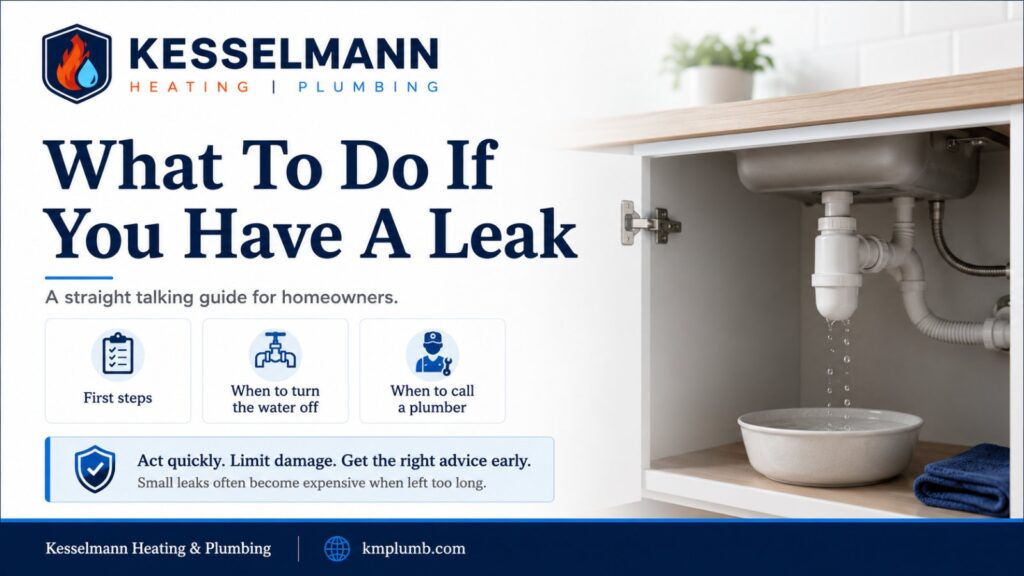
What To Do If You Have A Leak In Your Home
Finding water where it should not be is stressful.
You may see a stain on the ceiling, water under the kitchen sink or damp around the bath. If the leak is large, you may have water running across the floor or coming through a light fitting.
The important thing is not to panic, but not to ignore it either.
Most leaks are manageable when you act quickly. The problems become more expensive when water is allowed to spread into floors, ceilings, kitchen units and walls.
Quick answer: What should you do if you have a leak?
- Stop using the bath, shower, sink, toilet or appliance if using it makes the leak worse.
- Turn off the main cold water stop tap if you do not know where the water is coming from.
- Turn off the electricity at the consumer unit if water is near electrical fittings, but only if it is safe to reach.
- Move possessions away from the affected area.
- Use towels, trays or buckets to limit further damage if this can be done safely.
- Take photographs of the leak and any visible damage.
- Call a plumber and explain whether the water and electricity have been isolated.
- Do not assume the problem is solved simply because the dripping has stopped.
Your internal stop tap is often under the kitchen sink, although it may also be in a utility room, garage, cupboard, bathroom or under the stairs. Turn it clockwise to shut off the water. Never force a stop tap that is seized or very stiff.
First, work out whether using something causes the leak
One of the first questions we ask is:
Is the leak constant, or does it only happen when something is used?
This gives us an important starting point.
What you noticeWhat it may suggestWater appears when the shower is usedShower seal, screen, tray or waste leakWater appears when the bath is emptiedBath waste, trap or waste pipe problemWater appears when the basin is usedBasin waste, trap or seal problemWater appears after flushing the toiletToilet connection, seal, cistern or waste problemWater is present all the timeMains water pipe, heating pipe or another pressurised supplyA ceiling stain slowly gets darkerA small leak that may have been present for some timeThe water meter moves when everything is offA possible hidden leak within the property or supply pipe
This does not give you a final diagnosis. It simply helps you decide what to stop using and what information to give your plumber.
For example, if water only appears when the shower runs, stop using the shower. If it continues even when nobody is using water, turn off the main water supply and seek advice.
The most common household leaks we attend
In our experience, bathroom leaks are among the most common.
They often come from:
- Failed silicone around a bath or shower tray
- A shower screen that is not sealing properly
- A loose or leaking shower waste
- A bath waste or overflow
- Water escaping through damaged grout or movement around the tray
- Poor plumbing hidden below the bath or shower
The next common area is underneath the kitchen sink.
We regularly find problems around:
- The sink waste
- The trap
- Loose waste connections
- Appliance waste hoses
- Old isolation valves
- Pipe joints hidden behind units
Some of these leaks begin with an occasional drip. That does not mean they are harmless.
A small amount of water escaping every time the sink or shower is used can gradually soak into chipboard units, flooring, plasterboard and timber.
Slow leaks can cause serious damage
People naturally react quickly when water is pouring across the floor. The danger of a slow leak is that it can continue unnoticed.
The surrounding materials absorb the water. By the time a stain appears, the leak may have been present for days or weeks.
We tend to see three broad types of leak.
Type of leakWhat usually happensA very large leakIt is obvious and normally gets an immediate responseA noticeable but manageable leakIt is often found and repaired fairly quicklyA very slow leakIt can spread unnoticed and cause significant hidden damage
The very slow leak is often the one people underestimate.
A ceiling stain that was ignored
We recently attended a property where a tenant had noticed yellow staining on the ceiling for several weeks.
It was left because it did not appear urgent.
The cause was a leak from the bathroom above. By the time it was investigated, the repair involved more work, including replacing tiles.
Reporting the stain when it first appeared could have reduced the damage and the amount of work required.
A yellow or brown ceiling stain is not normal. Even if the area feels dry, there may still be an intermittent leak that only occurs when a bath, shower or toilet is used.
Water can travel a long way from the actual leak
The place where you see water is not always where the leak started.
Water can follow:
- Pipework
- Floor joists
- The underside of flooring
- Cables
- Gaps behind kitchen units
- The edges of shower trays and baths
- Slopes in floors and ceilings
We attended a local kitchen where a compression waste fitting had been installed underneath the kitchen units, right at the back of the kick space.
The fitting eventually came apart.
Waste water discharged underneath the units and travelled for around five metres. It then began moving beneath the floor.
Fortunately, the homeowner noticed the signs and acted before it travelled much further. It could easily have remained hidden for longer due to the position of the fitting.
This is why finding one wet area does not always prove you have found the source.
What to do if you cannot identify the source
If you are unsure what is leaking, turn off the internal cold water stop tap.
This can stop or reduce leaks from mains fed water pipes and fittings. It will not immediately solve every possible leak.
For example:
- A waste pipe may only leak when a fitting is used
- A heating system can still contain water after the stop tap is closed
- A hot water cylinder or storage tank may hold stored water
- Water already trapped in a ceiling or floor may continue dripping
- Rainwater can enter through roofs, walls or external seals
After turning off the stop tap, open the kitchen cold tap briefly to check whether the water supply has stopped.
If water continues escaping, stop using all nearby fittings and call a plumber.
Bristol Water advises that if a water meter stops moving after the internal stop tap is closed, the leak is likely to be within the property after that valve. If it continues moving, the leak may be between the meter and the internal stop tap.
What if the stop tap will not turn?
A large number of homeowners do not know where their stop tap is.
Others know where it is but have not touched it for years. When an emergency happens, they discover that it is too stiff to operate.
Do not use excessive force on a seized stop tap. You could damage the valve or pipework and create another leak.
Call a plumber if:
- The stop tap will not move
- The handle is damaged
- Water starts leaking from the valve
- The valve turns but does not stop the water
- You cannot find the stop tap
- Access to it is blocked
External stop taps are normally owned or controlled by the local water supplier. There can be restrictions on operating them, so contact your water supplier if the internal supply cannot be isolated.
What to do when water is near electricity
Treat water near electricity seriously.
If water is coming through a light fitting, socket or electrical appliance:
- Do not touch the wet fitting.
- Keep other people away from the area.
- Turn off the electricity at the consumer unit, but only if the unit and the route to it are dry and safe.
- Turn off the water if you can do so safely.
- Call a plumber to find and stop the leak.
- Arrange for a registered electrician to inspect the installation if it has been saturated or there is any doubt about its safety.
Do not remove a wet light fitting or attempt electrical repairs yourself.
Electrical Safety First advises turning off the electricity at the consumer unit only when it is safe to do so. Professional electrical advice should be obtained if water has entered electrical equipment or there are signs of arcing or overheating.
Do not ignore these warning signs
Contact a plumber when you notice:
- Yellow or brown marks on a ceiling
- Paint bubbling or flaking
- Plasterboard becoming soft
- Swollen kitchen units
- A damp or musty smell
- Flooring lifting or changing colour
- Silicone pulling away from a bath or shower tray
- Water around a toilet after flushing
- Water beneath a sink
- A boiler or heating system losing pressure repeatedly
- The sound of water when no taps are running
- A water meter moving when everything is turned off
- Damp that remains present regardless of the weather
These signs may seem minor, but they can indicate that water is being absorbed into the building.
Common mistakes homeowners make
Ignoring a small stain
A stain is evidence that water has reached somewhere it should not.
Waiting for it to become larger rarely makes the eventual repair easier.
Continuing to use the fitting
If the ceiling leaks every time the shower is used, stop using the shower.
Repeatedly testing it can add more water to the damaged area.
Assuming the first visible defect is the only leak
You might find failed silicone around a bath, but there could also be a leaking waste underneath it.
A proper inspection checks the wider area before narrowing down the cause.
Forcing a seized valve
Old stop taps and isolation valves can begin leaking when disturbed.
If a valve will not move with reasonable pressure, do not attack it with grips or excessive force.
Applying more silicone without finding the cause
Silicone is useful when applied correctly, but it is not a universal leak repair.
Applying silicone over damp, dirty or failed sealant often hides the problem for a short period rather than solving it.
Carrying out a repair without the right skills
A temporary repair that fails can cause more damage than the original leak.
If you do not have the tools, knowledge or access needed to repair it properly, isolate the water and call a plumber.
Assuming the leak is fixed because the dripping stopped
Water may stop appearing because the shower, sink or toilet is no longer being used.
It may also be collecting somewhere else before becoming visible again.
How a plumber traces the source of a leak
Experience helps, but leak diagnosis should still follow a process.
We normally begin with the wider area and gradually narrow the search.
In a bathroom, this may involve checking:
- Whether the leak is constant or linked to use
- The shower screen or bath screen
- The seals around the bath or shower tray
- Taps and shower connections
- The waste and overflow
- The toilet and basin
- Visible water and heating pipework
- The room below
- Any hidden areas that can be accessed safely
Each fitting is tested separately where possible.
This matters because there can be more than one leak.
Finding one failed seal does not prove that the waste, screen and pipework are sound. Starting with a fixed assumption can cause the second problem to be missed.
Should you attempt a temporary repair?
Our honest advice is simple.
If you do not possess the skills to complete the repair properly, do not attempt it.
Turning off the water, stopping use of the fitting and catching drips safely are sensible damage limitation steps. Trying to rebuild joints, remove electrical fittings or seal over an unknown problem can make matters worse.
Even when a repair appears successful, it can be worth asking a competent plumber to inspect it.
A call out costs money, but so does replacing a damaged ceiling, floor or kitchen unit after an unverified repair fails.
A simple quarterly leak prevention check
We recommend carrying out a basic check around your home every three months.
It does not need to take long.
Kitchen
- Look inside the cupboard beneath the sink
- Feel around the trap and waste connections
- Check appliance hoses
- Look for swelling or water marks
- Check that isolation valves are dry
Bathroom
- Check the silicone around baths and shower trays
- Look for gaps or mould beneath the surface of seals
- Check around the toilet after flushing
- Look beneath the basin
- Check whether the shower screen is allowing water to escape
- Look at the ceiling below the bathroom
Main water supply
- Make sure everyone knows where the stop tap is
- Check that it can be operated without force
- Turn it slowly
- Confirm that it stops the cold water
- Open it slowly again
- Check that it remains dry afterwards
Heating
- Look for signs of corrosion around radiators and valves
- Check whether the boiler pressure keeps falling
- Run the heating occasionally outside winter rather than leaving components unused for many months
Valves and mechanical parts that are never used have a tendency to seize. The valve intended to help during an emergency is of little use if nobody can turn it.
What to tell the plumber when you call
You do not need to diagnose the leak yourself. A good plumber should ask the right questions.
The most useful information is:
- Where the water is visible
- Whether it is still leaking
- Whether it is constant
- What was being used when it appeared
- Whether the water has been turned off
- Whether electricity has been isolated
- Whether water is near a light, socket or appliance
- Whether there is a ceiling below the affected area
- How long the signs may have been present
Photographs and short videos can also help the plumber understand the situation before arriving.
Most homeowners have no frame of reference for judging leaks. It is completely understandable for a leak to feel like a disaster.
The priority is not to provide a perfect technical explanation. It is to make the property safe, limit the water and call someone who can assess it properly.
Our professional recommendation
Do not wait for a small leak to become an emergency.
If you see staining, damp, failed silicone or water under a unit, investigate it promptly.
You should also know where your internal stop tap is before you need it. Check it as part of your normal home maintenance rather than discovering during a major leak that it has seized.
When a leak needs professional attention, the repair should deal with the cause rather than simply covering the visible symptom.
Need a Gas Safe engineer in Weston-super-Mare?
Frequently asked questions
What should I do first if I find a water leak?
Stop using the fitting if this makes the leak worse. If you cannot identify the source, turn off the main cold water stop tap. Turn off the electricity as well if water is near electrical fittings and it is safe to reach the consumer unit.
Where is the main water stop tap?
It is commonly found under the kitchen sink. It may also be in a cupboard, utility room, garage, bathroom, cellar or beneath the stairs.
Which way do I turn the stop tap?
Turn it clockwise to close it. Turn it slowly and do not force it if it is seized
Can I put new silicone over the existing silicone?
This is rarely a good permanent repair. The old sealant normally needs to be removed and the area cleaned and dried. The tray or bath must also be checked for movement and other possible leaks.
Can a leak be somewhere different from the damp patch?
Yes. Water can travel along joists, pipes, cables, floors and the underside of kitchen units before becoming visible.